
It’s a basic matter of fairness that state sales taxes should be applied to things we buy, regardless of whether a purchase is made online or in a brick-and-mortar store. Back in 1992, however, before online shopping even existed, the Supreme Court handed down a ruling that made this a lot more difficult by telling out-of-state retailers (mostly catalogues back then) they didn’t have to collect sales tax – at least until the federal government says otherwise. In recent years, the explosion in online shopping has made the issue more urgent, and we expect that in 2012 the push for a more rational online sales tax policy could reach critical mass as more states seek to restore lost revenues.
Federal legislation. Sales taxes owed on Internet purchases can’t be collected comprehensively until the federal government empowers states to require that online retailers collect the tax. Until then, the best states can do is make use of the partial fixes discussed below. Fortunately, a federal solution might not be as far off as it once seemed. Multiple bills have been introduced in Congress that would allow for a comprehensive solution, and an increasingly influential coalition of state lawmakers and traditional retailers are pushing for a national law.
State legislation. Even though federal legislation is needed to fix the online sales tax problem in its entirety, states do have tools at their disposal for chipping away at it right now. Specifically, states can require that out-of-state online retailers collect sales taxes if they are partnered with in-state affiliate businesses, or if they have in-state subsidiaries or sister companies. Discussion of enacting a law of this type is currently underway in Arizona, Florida, Indiana, Maryland, and Virginia, and we expect that other states will join this list soon.
State-level deals with Amazon.com. Amazon.com has a long history of shirking its responsibility to collect sales taxes, but to its credit the company seems to have realized that it won’t be able to continue this dodge forever. In just the last year, Amazon has struck deals with South Carolina, California, Tennessee, and Indiana to begin collecting sales taxes at a specific future date. Recent reports say that Florida might join this list soon, as Amazon is eyeing building a distribution center in the Sunshine State – if it can convince lawmakers to let it off the tax-collecting hook for just a few more years. We’re sympathetic to traditional retailers who point out that Amazon can and should begin collecting sales taxes sooner rather than later, and hope that this unwieldy patchwork of agreements helps build the case for a national solution.

 has surely been fueled by the recent revelation of presidential candidate Mitt Romney’s
 the Tax Reform Act of 1986, we should crack down on wasteful, often harmful corporate tax subsidies. The 1986 reforms curbed useless tax breaks for oil companies, public utilities, defense contractors and a wide array of corporate special interests. It rewrote the way we tax multinational corporations to make it harder for them to avoid their U.S. tax responsibilities by moving their U.S. profits to foreign tax havens. And by doing so, it made our economy more productive and increased corporate tax payments by more than a third.
 paperwork reveals that it plans to wipe out all of the company’s federal and state income tax obligations for 2012 and actually generate a half billion dollar tax refund. As part of the plan, Facebook co-founder and controlling stockholder, Mark Zuckerberg can expect a $2.8 billion after tax cash windfall.
 To be sure, Zuckerberg will have to pay federal and state income taxes (at ordinary tax rates) when he exercises his $4.8 billion worth of stock options in 2012. That’s only fair, since that $4.8 billion obviously represents income to him. But even after paying taxes, he’ll still end up with $2.8 billion.
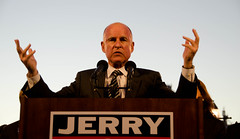 California Governor Jerry Brown is taking his
  $1 billion budget gap this year. Governor Christine Gregoire is
  Massachusetts Governor Deval Patrick is promoting some r
 for Tax Justice’s report
  Texas: The community group Good Jobs Great Houston took