
 Ohio’s John Kasich is one Republican governor who wants his state to accept federal dollars from the Affordable Care Act to extend Medicaid to his neediest constituents. Kasich included that money in his budget proposal early this year, but the legislature rejected it. But then the Governor vetoed the language rejecting those dollars in the budget bill that he finally signed. Enter the Ohio State Controlling Board – a board of six legislators and a policy adviser for the Ohio Office of Budget and Management– whose members then went ahead and voted that the state will follow the Governor’s lead and expand its Medicaid program using the federal funds. But now, six House members are plaintiffs in a lawsuit challenging the authority of the Board to tap into that federal Medicaid money.
Now it’s up to the courts to decide whether the Controlling Board’s actions were constitutional, but a State Senator who serves on the Board (and who also voted for the expansion) has a very specific idea of how to spend the money. Senator Chris Widener is sponsoring a bill that would turn the savings generated from Medicaid expansion (about $400 million in savings from now through June 2015) into a 4 percent across the board permanent personal income tax rate reduction.
Widener’s plan is doubly irresponsible. First, the Medicaid expansion isn’t a done deal, so the revenue to pay for a tax cut may never materialize. Secondly, legislative staff has estimated the cost of the proposed tax cut at more than $500 million by the end of the next fiscal year—substantially more than the $404 million Ohio could see from Medicaid expansion. The tax cut Widener proposed would also disproportionately benefit the wealthiest Ohioans. The Institute on Taxation and Economic Policy’s (ITEP) analysis of the tax cut proposal in this Policy Matters Ohio (PMO) report found that Ohioans in the top 1 percent of the income spectrum would receive an average state tax cut of $1,437 a year. Middle-income families would get an average of $28, and the poorest twenty percent of Ohioans would see a tax cut averaging $1.
PMO argues that it is inappropriate to discuss tax cuts when the state has so many other unmet needs. Check out PMO’s report, “Use Medicaid savings to improve Ohio, not to give even more tax cuts to the affluent.” It gives a slew of ways in which the expected $400 million in savings could be used more productively, such as hiring police, firemen and teachers and funding preschool programs. Ohio has suffered multiple rounds of tax cuts that have eviscerated state services and local governments; any windfall revenues should be spent trying to undo some of that damage.
Thankfully, the Columbus Dispatch is reporting that the “income-tax cut is getting a cool reception from House GOP leaders.” House Speaker William Batchelder seems to agree with PMO, when he says, “The veterans are not being adequately treated. We have tremendous problems with heroin addiction in this state. We have a lot of problems, and we’d probably look there first … before we do a (tax) cut of that size.”

 earn in tax havens are floating in baskets in the Caribbean, and are unavailable for use in the United States. But that’s not true. As we’ve learned from the annual reports of companies such as Apple, most of that money is actually invested in the United States, in the stock market, corporate bonds and government bonds. In other words, most of the money is already here. It just hasn’t been taxed.
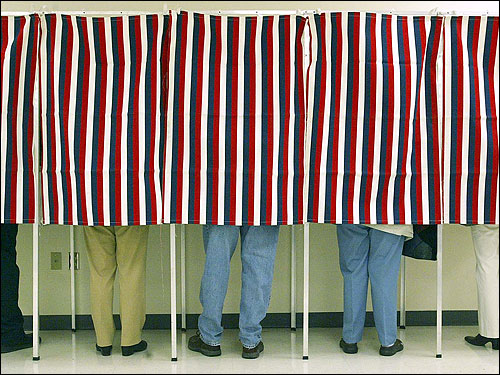 Despite being an off-year election, there were a few significant tax policy issues at stake in the elections held this week in Colorado, Minnesota, New Jersey, Ohio, Texas, Virginia, and New York City.
 This creates enormous problems for U.S. tax enforcement efforts. It’s more difficult to persuade foreign governments to help the IRS track down money hidden offshore when several U.S. states seem to be helping people from all over their world evade taxes owed to their governments. Another problem is that much of the money hidden in shell companies incorporated in Delaware or other U.S. states may be U.S. income that should be subject to U.S. taxes, and/or income generated by illegal activities in the U.S.
 We’ve followed the
 During a year in which
  At the behest of Kansas Governor Sam Brownback, the state legislature has enacted two rounds of major tax cuts that disproportionately benefit the wealthiest Kansans. After signing into law the first set of tax cuts, Governor Brownback called the radical bill “
 The House and Senate budget conference committee that was formed as part of the deal that ended the federal government shutdown and raised the debt ceiling is unlikely to come to any “grand bargain” that dramatically reduces the deficit or increases public investments. This is because, as House Budget Committee Chairman Paul Ryan reiterated this week, Congressional Republicans will oppose any proposal that includes new revenue.