
Much of the spending that Americans see in their daily lives is the work of state and local governments, which build the roads, bridges and schools, and hire and train the teachers and police officers. In  many ways, the most overlooked aspect of the debate over federal tax reform is the ways in which Congress might help — or seriously hinder — state and local governments from raising the revenue needed to pay for these public investments.
In response to a hearing held on this topic by the Senate Finance Committee, ITEP’s executive director Matthew Gardner submitted written testimony exploring this point. The testimony explains, for example, that the federal income tax deduction for state and local taxes has many justifications that do not apply to other tax expenditures. It also explains that President Obama’s Build America Bonds program would improve upon an existing federal subsidy (for state and local governments that borrow to finance capital investments) so that it will no longer provide a windfall to high-income individuals and corporations.
The testimony also addresses proposals to regulate state and local taxing power. Some of these proposals would facilitate efficient and fair tax collection (like the Marketplace Fairness Act, which is geared towards solving the internet sales tax problem). Others would simply restrict taxes and make taxes more complicated at the behest of corporate lobbyists (like the so-called “Business Activity Tax Simplification Act”).
While these proposals and details might sound awfully arcane, they ultimately will influence issues that are very central in our daily lives — like the class size in your neighborhood school or the length of your commute on local roads and highways.
 Expenditure Commission just
 ahead and approved a ten-year, $36 million tax subsidy to keep the state’s NBA team, the Hornets, in New Orleans until 2024.
 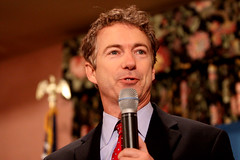 Remember the Tea Party? Well, freshman Kentucky Senator Rand Paul is living up to his reputation as the darling of the Taxed Enough Already movement that shook the 2010 elections.
 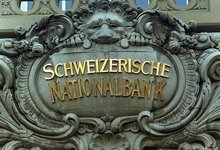 ank secrecy laws to deflect requests for account holder information, and the IRS and Justice Department have been investigating 11 Swiss financial institutions on criminal charges of facilitating tax evasion.
 Kansas Governor Brownback’s insistence on steep tax cuts has met more resistance. A group called Traditional Republicans for Common Sense has
  Political leaders love to claim fealty to the idea of “loophole-closing” tax reform, but refuse to provide details on the specific tax breaks they would eliminate. As we’ve recently
  with Stephen Moore, his friend on The Wall Street Journal’s editorial board, to pen yet another
 the challenge of taxing purchases made over the Internet in the same way as purchases made in “brick and mortar” stores. Nevada and Tennessee got agreements from Amazon.com, the mother of all online retailers, to start doing its part to collect those taxes, and it looks like Massachusetts isn’t far behind.