
Note to Readers: Over the coming weeks, ITEP will highlight tax policy proposals that are gaining momentum in states across the country. This article takes a look at efforts to roll back business taxes in states based on the shopworn, erroneous argument that tax cuts are good for the economy.
Robust corporate income taxes ensure that large and profitable corporations that benefit from publicly subsidized services (transit that delivers customers, education that trains workers, electricity that powers industry, etc.) pay their fair share towards the maintenance of those services. But, as ITEP’s recent report, Corporate Tax Dodging in the Fifty States, 2008-2010, found, twenty profitable Fortune 500 companies paid no state corporate income taxes over the last three years, and 68 paid none in at least one of those three years, even as state budgets are stretched to the point of breaking.
As a new legislative season gets underway, too many political leaders are bashing taxes in general and business taxes in 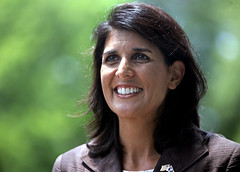 particular. Here are some states to watch for more bad business tax policy (followed by a few glimmers of hope).
South Carolina – South Carolina Governor Nikki Haley is following through on her misguided campaign promise and recently proposed eliminating the state’s corporate income tax over four years. This despite the fact that South Carolina’s corporate income taxes as a share of tax revenue are among the lowest in the country, at a mere 2.4 percent.
Kentucky – State Representative Bill Farmer has filed legislation that, instead of strengthening the tax, would repeal the state’s corporate income tax entirely. Farmer worked as a “tax consultant” and has been an anti-tax crusader in the Kentucky legislature since 2003.
Nebraska – Governor Dave Heineman recently unveiled his plan to reduce the top corporate income tax rate from 7.81 to 6.7 percent (and eliminate other key state revenue sources, too).
 Florida – In his recent State of the State address, Governor Rick Scott said that taxes and regulations were “the great destroyers of capital and time for small businesses.” And – no surprise here – he also called for lowering business taxes.
Idaho – Governor Butch Otter has called for $45 million in tax cuts but is leaving the details to the legislature. Of course, when a lobbyist from the Idaho Chamber Alliance of businesses calls the governor’s position “manna from heaven,” there’s a good chance some of those cuts will be given to business.
A few signs of sanity. In Connecticut , the governor is looking to improve the return on tax-break investment for the Nutmeg state. Perhaps he’s learned from states like Ohio, where a recent report issued by the attorney general showed that fewer than half of all companies receiving tax subsidies actually fulfilled their commitments in terms of job creation or economic growth. We also see combined reporting getting attention in a couple of states. It’s smart policy that discourages companies from creating multi-state subsidiaries to shelter their profits from taxes. We will report on other positive developments as warranted – so watch this space.
Photo of Rick Scott via Gage Skidmore and Photo of Nikki Haley via Mary Austin Creative Commons Attribution License 2.0

 During his State of the Union address, President Obama said that “no American company should be able to avoid paying its fair share of taxes by moving jobs and profits overseas.” We couldn’t agree more. However, a CTJ report explains that his proposed solutions fail to raise revenue, retain and expand the loopholes that allow corporations to avoid taxes, and mark a further retreat from earlier, stronger proposals.
 Heineman unveiled his three-pronged tax reduction proposal: income tax rate reductions and broadening of income tax brackets, a reduction in the corporate income tax rate, and complete elimination of the inheritance tax. He said that “Our highest priority should be tax relief for Nebraska’s hard-working, middle class taxpayer.”
 Obama proposed that Congress enact his “Buffett Rule,” inspired by billionaire Warren Buffett’s complaint that he has a lower effective tax rate than his secretary.
 the rich and raise them on everyone else. Kansas Governor Sam Brownback last week unveiled his
 Whether state or federal,
  President Obama’s jobs council has released a report full of recommendations, including somewhat misguided points on the federal corporate income tax. The report rightly points out that the corporate income tax is full of loopholes that should be closed, but fails to call for a reform that actually raises revenue to support under-funded public services and investments. The report also perpetuates some misunderstandings about the effects of the U.S. corporate income tax on our economy and on working people.
 Romney went on to say, “Because my last 10 years, I’ve … my income comes overwhelmingly from investments made in the past, rather than ordinary income or rather than earned annual.”
 reflects a major dispute between corporate and labor leaders over tax reform. According to
  President Obama hosted an “Insourcing American Jobs Forum” last week with business leaders who are bringing jobs back to the United States. During the event, the President